Tuesday, November 12, 2013

Gettysburg Address Lecture

On Wednesday, November 20 at 7:00 PM, the library will host a program to commemorate the 150th anniversary of the delivery of the Gettysburg Address.

The Gettysburg Address is one of the best-known speeches in American history, and David Pruitt will discuss its original delivery and subsequent historical and cultural significance. The program will be free and open to the public.

The Gettysburg Address was delivered on April 19, 1863 at the dedication of a cemetery in Gettysburg, Pennsylvania, four and a half months after the Union victory in the battle there. Lincoln’s speech was not intended to be the primary focus of the ceremony; that honor belonged to the two-hour oration delivered by Edward Everett. But while Everett’s speech has been largely forgotten, Lincoln’s brief address is now regarded as one of the premier examples of American orator.

We hope you will join us to celebrate this inspirational moment in American history. 

Thursday, October 24, 2013

The Lord of the Rings Discussion Set

The Library will host a discussion of The Lord of the Rings by J. R. R. Tolkien on Monday, November 11 at 7:00 PM. This will be second in the library’s fall series on British fantasy novels. The program will be free and open to the public.

Originally published in three volumes in 1954 and 1955, The Lord of the Rings became one of the most important and influential fantasy novels of the twentieth century. Indeed, its success was so great that the “high fantasy” mode that the book exemplified became the dominant, and almost only, commercially viable form of fantasy for many years. More than that, the book became an American cultural phenomenon in the mid-1960s and has become one of the best-selling titles in history.

The story concerns the efforts of a group of characters to destroy a magic ring and defeat an evil force that threatens their land of Middle-earth. From 2001 to 2003, the book was adapted in a series of three critically acclaimed and commercially successful films, directed by Peter Jackson. The third film in the series, The Return of the King, won eleven Academy Awards, including the award for Best Picture.

J. R. R. Tolkien was a philologist and professor at Oxford University. Born in 1892 in what is now South Africa, Tolkien studied at Oxford and fought in World War I, though he fell ill and was sent home. Drawing on his interest in languages and mythology, he developed a long and complex history of a fantasy realm that he termed “Middle-earth,” and out of that material eventually grew The Hobbit, published in 1937, and The Lord of the Rings. More of this material was subsequently published after his death in 1973 as The Silmarillion (1977) and in other volumes edited by his son and literary executor, Christopher.

The library’s series “The Fantastic Fifties: British Fantasy at Mid-Century or, What’s With All the Initials?” will conclude on Monday, December 9 with a discussion of The Once and Future King by T. H. White. Copies will be available to borrow in advance.

Wednesday, October 9, 2013

Next Short Story Discussion Program

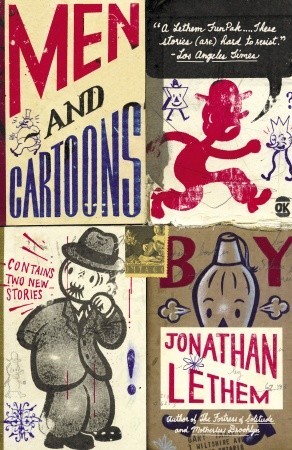
The library will hold its next Book Club for Writers discussion on Thursday, October 24. The discussion will feature short stories by three contemporary, prize-winning writers who are all interested in the fantastic: Michael Chabon, Jonathan Lethem, and Steven Millhauser.

Copies of Chabon’s “In the Black Mill,” Lethem’s “Super Goat Man,” and Millhauser’s “Cat ’n’ Mouse” will be available from the library in advance. The discussion will begin at 7:00 PM and will be free and open to the public.

Winner of the Pulitzer Prize for his novel The Amazing Adventures of Kavalier & Clay and of the Hugo and Nebula awards for The Yiddish Policemen’s Union, Michael Chabon is the author most recently of Telegraph Avenue. Chabon is known for blending elements of genre and literary fiction in his writing. “In the Black Mill” is purported to be the work of August Van Zorn, a fictional persona that Chabon has fashioned. Van Zorn is said to be a writer of pulp horror stories in the tradition of Lovecraft and Poe.

Jonathan Lethem’s novel Motherless Brooklyn won the National Book Critics Circle Award for Fiction and his novel The Fortress of Solitude was a bestseller. His most recent book, Dissident Gardens, was just published last month. In 2005, he was awarded a MacArthur Fellowship, the so-called “genius grant.” Lethem is another writer known for blending literary and genre styles, an approach that characterizes “Super Goat Man,” a story first published in The New Yorker.

Steven Millhauser won the Pulitzer Prize for his novel Martin Dressler, but he is perhaps best-known as a writer of short stories. Millhauser’s stories are reminiscent of Poe and Borges; “his characteristic method,” says Jonathan Lethem, “mingles dreamlike and often morbid or perverse fantasies with meticulous realist observation.” Millhauser teaches at Skidmore College and his collections include In the Penny Arcade, The Barnum Museum, and The Knife Thrower. Lethem says that “Cat ’n’ Mouse” appears in his own personal “Millhauser hall of fame.”

Book Club for Writers is a fiction discussion program that meets four times a year. Discussions are open to all, and focus particularly on questions of craft and technique that will interest writers and aspiring writers. Created by the New Hampshire Writers’ Project, Book Club for Writers is sponsored locally by a fiction writing group that meets weekly at the Haverhill Corner Library.

The next Book Club for Writers discussion will be held on Thursday, January 23, 2014 and will feature “Mister Squishy” by David Foster Wallace, and two stories by George Saunders, “In Persuasion Nation” and “The Semplica Girl Diaries.”

Wednesday, October 2, 2013

C. S. Lewis Discussion

The library will host a discussion of The Lion, the Witch, and the Wardrobe by C. S. Lewis Monday, October 14 at 7:00 PM. This will be first discussion in the library’s fall series on British fantasy novels. The discussion will be free and open to the public and copies of the book will be available to borrow in advance.

The Lion, the Witch, and the Wardrobe was the first volume published in Lewis’s popular series The Chronicles of Narnia. It tells the story of four children in World War II-era England who travel to the mysterious world of Narnia, which is populated by talking animals and mythical creatures. The children find themselves the instruments of an ancient prophecy that may free Narnia from the rule of the evil White Witch.

Best remembered today as the author of the Narnia series, C. S. Lewis was a medievalist scholar who taught at Oxford and Cambridge. He was also known for a number of works of Christian apologetics, including Mere Christianity (adapted from a series of BBC radio broadcasts) and The Screwtape Letters. He was a close friend of J. R. R. Tolkien, author of The Lord of the Rings, and they both belonged to an Oxford literary discussion group known as the Inklings.

The Chronicles of Narnia is a classic of children’s literature that has sold over 100 million copies in 47 languages. The Lion, the Witch, and the Wardrobe was published in 1950 and the remaining six volumes in the series appeared at intervals of one each year. The books have been continuously in print ever since, and have been adapted multiple times for other media. Three have been adapted in recent years as major Hollywood movies.

The library’s discussion series is entitled “The Fantastic Fifties: British Fantasy at Mid-Century or, What’s With All the Initials?” The series will also feature The Lord of the Rings by J. R. R. Tolkien on Monday, November 11 and The Once and Future King by T. H. White on Monday, December 9.

Tuesday, September 10, 2013

Fall Book Discussion Series

The Library’s fall book discussion series will feature three masterworks of British fantasy. Discussions of works by C. S. Lewis, J. R. R. Tolkien, and T. H. White will be free and open to the public.

The series is entitled “The Fantastic Fifties: British Fantasy at Mid-Century or, What’s With All the Initials?” The discussions will feature: The Lion, the Witch, and the Wardrobe by C. S. Lewis on Monday, October 14; The Lord of the Rings by J. R. R. Tolkien on Monday, November 11; and The Once and Future King by T. H. White on Monday, December 9. All discussions begin at 7:00 PM and copies of the books will be available to borrow in advance.

These three books, published in the fifties and still enormously popular, played a crucial role in transforming fantasy from an esoteric taste to mainstream entertainment. They have each been repeatedly adapted to other media, they have spawned legions of imitators, and they have generally increased the public’s tolerance of and appetite for the fantastic. From boy wizards to lovelorn vampires, works of fantasy today dominate the bestseller lists, the cineplex, and the television screen, thanks in part to these books.

This series will allow readers to visit – or re-visit – works that have each become icons of popular culture. The Lion, the Witch, and the Wardrobe (1950) was the first book to be published in Lewis’s seven-volume Chronicles of Narnia. Tolkien’s The Lord of the Rings (published in three volumes in 1954 and 1955) became a cultural phenomenon and set the template that works of epic fantasy would follow for the next several decades. The Once and Future King (1958) collected and concluded White’s tetralogy of Arthurian fantasies. Readers will come to understand why these works enjoy such enduring appeal.