Saturday, January 25, 2014

Abraham Lincoln Programs

The library will offer a series of programs in February exploring the character and inner life of Abraham Lincoln, presented by Haverhill Corner resident David Pruitt, a longtime student of Lincoln’s life and thought.

The programs will be offered on three Wednesdays: February 5, 12, and 19. They will be held at the Haverhill Congregational Church Parish Hall at 7:00 PM and will be free and open to the public.

The February 5 program will focus on “The Faith Journey of Abraham Lincoln.” Pruitt, himself a minister, will address such questions as:

  • Is it true that Lincoln never joined a church? 
  • Was he ever an atheist? 
  • Was he a Christian? 
  • What forces developed and deepened his faith? 
  • Was there anything central to his faith that we would find “hard to swallow”? 
  • Why was his second inaugural address one of the most astonishing sermons ever delivered? 
  • What can we learn from his journey? 

In two subsequent programs, Pruitt will draw on a wide range of sources to explore further aspects of Lincoln’s inner life and character.

Last fall, Pruitt presented a well-received program commemorating the 150th anniversary of the delivery of Lincoln’s Gettysburg Address, discussing its original delivery and subsequent historical and cultural significance. That brief speech is today regarded as one of the premier examples of American oratory.

Saturday, January 11, 2014

Short Story Discussion

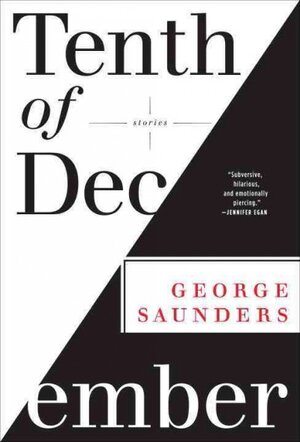
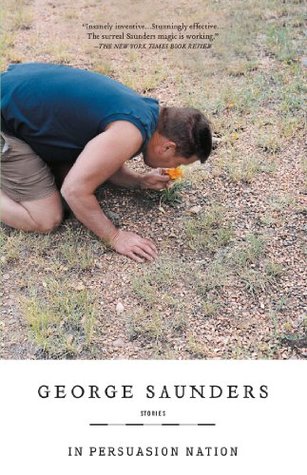
The library will hold its next Book Club for Writers discussion on Thursday, January 23. The discussion will feature short stories by George Saunders and David Foster Wallace.

Copies of “Mister Squishy” by David Foster Wallace, and of “In Persuasion Nation” and “The Semplica Girl Diaries” by George Saunders, will be available from the library in advance. The discussion will begin at 7:00 PM at the library and will be free and open to the public.

George Saunders is a writer known primarily for his short stories. His most recent collection, Tenth of December, was published last year; it was a national bestseller, a finalist for the National Book Award, and was named one of the ten best books of the year by the New York Times Book Review. Last year, Saunders won the PEN/Malamud Award for Excellence in the Short Story, and he had previously been the recipient of both a MacArthur Fellowship (the so-called “genius grant”) and a Guggenheim Fellowship. His other books include CivilWarLand in Bad Decline, Pastoralia, and The Brief and Frightening Reign of Phil. He teaches at Syracuse University.

David Foster Wallace was “one of the most influential and innovative writers of the past twenty years” according to the Los Angeles Times. He is best remembered for his 1996 novel Infinite Jest, named by Time magazine as one of the 100 best English-language novels from 1923 to 2005. Wallace was also the recipient of a MacArthur Fellowship and he taught at Illinois State University and Pomona College, but after years of battling depression, he committed suicide in 2008. His unfinished novel The Pale King was published posthumously in 2011 and was a finalist for the Pulitzer Prize. His other books include the story collections Brief Interviews with Hideous Men and Oblivion, and the essay collections A Supposedly Fun Thing I’ll Never Do Again and Consider the Lobster.

Book Club for Writers is a fiction discussion program that meets four times a year. Discussions are open to all, and focus particularly on questions of craft and technique that will interest writers and aspiring writers. Created by the New Hampshire Writers’ Project, Book Club for Writers is sponsored locally by a fiction writing group that meets weekly at the Haverhill Corner Library.

The next Book Club for Writers discussion will be held on Thursday, April 24 and will feature “Sonny’s Blues” by James Baldwin and “The Appropriation of Cultures” by Percival Everett.

Annual Meeting of the Haverhill Library Association - Jan. 20, 2014


The annual meeting of the Haverhill Library Association is Monday evening, January 20th at 7:30 pm.
The public is invited to attend.

Wednesday, December 11, 2013

Come browse our huge collection of Christmas books!


  These are just a few of the many wonderful children's books we have in the library. Come and check them out!!


Monday, November 25, 2013

T. H. White Book Discussion

The library will host a discussion of The Once and Future King by T. H. White on Monday, December 9 at 7:00 PM. The program will be free and open to the public. This will be the third in the library’s fall series on British fantasy novels.

Published in 1958, The Once and Future King is White’s contemporary reinterpretation of the legends of King Arthur. This volume collected White’s three earlier Arthurian fantasies and added the concluding tale, so that the four sections of the book are: “The Sword in the Stone”; “The Queen of Air and Darkness”; “The Ill-Made Knight”; and “The Candle in the Wind.”

The Sword in the Stone, first published in 1938 and widely familiar as the source for the 1963 Disney movie, is a whimsical fantasy of the youth and education of King Arthur. White significantly revised this section for publication in The Once and Future King, dropping some episodes and adding others, in order to make it more consistent with the themes subsequently developed in the rest of the book.

The remaining sections are darker in tone and faithful to the central stories of Arthurian legend, especially as interpreted by Sir Thomas Malory in Le Morte d’Arthur. They tell the stories of Arthur’s rule as king and his establishment of the Round Table, of the affair between Sir Lancelot and Queen Guenever, and of Arthur’s struggle with his illegitimate son, Mordred. While White drew on these traditional stories, however, he often reinterprets the characters in contemporary psychological terms.

In The Once and Future King, T. H. White “took hold of the ultimate English epic,” says critic and novelist Lev Grossman, “and recast it in modern literary language, sacrificing none of its grandeur or strangeness.” White, says Grossman, should be “considered one of the founding fathers of modern fantasy, the way Tolkien and C. S. Lewis are.”